The new Pixel 10a is the least expensive member of the Pixel 10 family, starting at $499 for the 128GB model and $599 for the 256GB model. That’s the same pricing and storage as the Pixel 9a. And that’s not all that’s the same. The Pixel 10a is a retread of the 9a with just a few upgrades. I have yet to fully test the Pixel 10a, but based on the design and specs, I have enough information to give you a quick rundown on what’s new and what’s not. Here’s how they stack up.
Design: They’re Almost Twins
The Pixel 10a and 9a look remarkably similar with their flat fronts, flat sides, and rounded corners. The 10a measures 6.06 by 2.87 by 0.35 inches (HWD) and weighs 6.5 ounces, while the Pixel 9a is 6.09 by 2.89 by 0.35 inches and weighs 6.6 ounces.
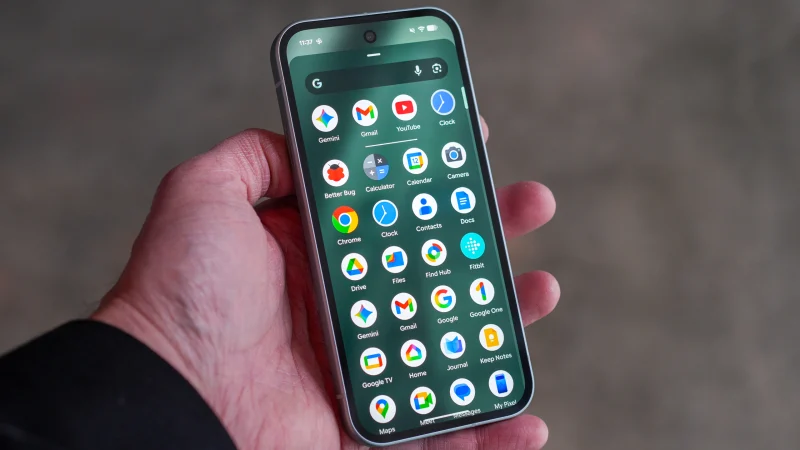
The Pixel 10a reduces its screen bezels by 10% compared with the 9a, but both are thicker than the bezel around the Pixel 10‘s screen. The biggest design difference between the two devices is in the rear panels. The 10a has a completely flat back, while the 9a has a small, raised module around its camera pill but is otherwise flat. Google says it rearranged a lot of the internal components to make the entirely flat back possible. It looks nice, but we’re talking about 1 or 2mm here.
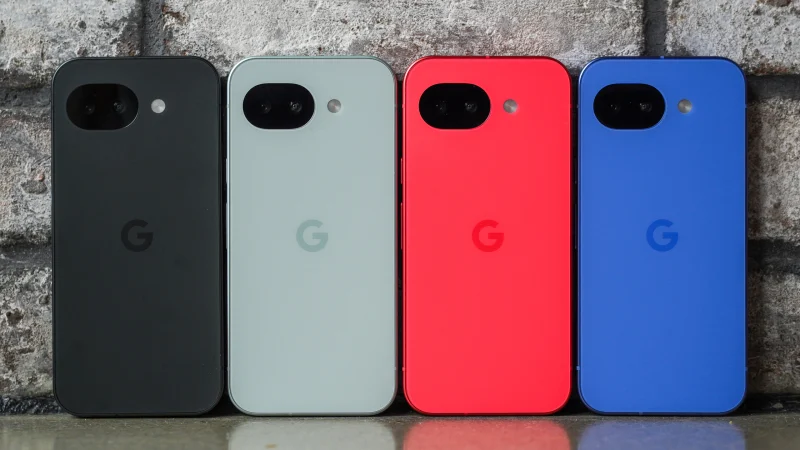
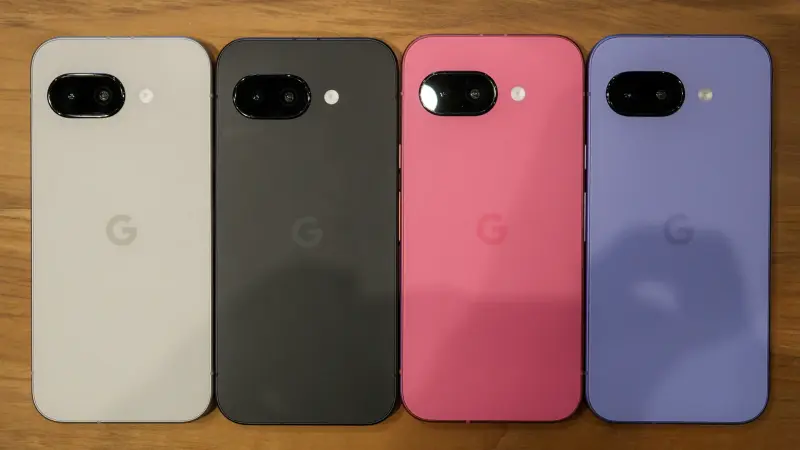
As for colors, the Pixel 10a comes in Berry (reddish), Fog (light green), Lavender, or Obsidian (black). The 9a is available in Iris (lavender), Obsidian, Peony (pink), or Porcelain.
Both are IP68-rated to resist dust and water. The Pixel 10a uses Corning Gorilla Glass 7i to cover its screen, while the 9a uses the much older Gorilla Glass 3.
These devices are virtually identical, but the flat rear panel, smaller bezel, and tougher screen glass give the 10a the win.
Winner: Pixel 10a
Display: One’s Brighter
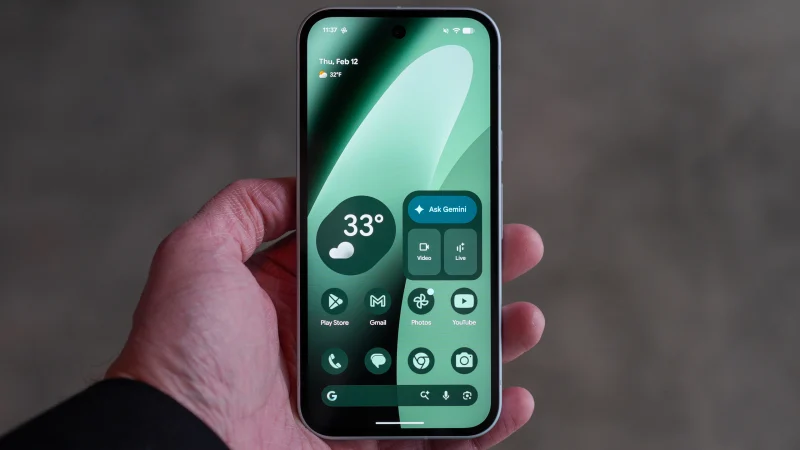
Both devices feature a 6.3-inch OLED screen with a resolution of 2,424 by 1,080 pixels and a refresh rate that varies from 60 to 120Hz. The Pixel 10a’s maximum brightness is 3,000 nits compared with the 9a’s 2,700-nit maximum. Google calls this an improvement of 11%—and it is, mathematically at least.

Winner: Pixel 10a
Performance: The Same Silicon Soul
Unusually, the Pixel 10a and 9a use the same Tensor G4 processor, which is paired with 8GB of RAM. Both devices are offered in 128GB or 256GB storage capacities. Anyone hoping for an improvement here is out of luck.
Theoretically, these devices should offer the same performance, but until I’ve fully tested the 10a, I cannot make a definitive determination.
Connectivity: Sending Out an SOS
One new component you’ll find inside the 10a is a fresh modem. Google redesigned the connectivity chip to give the 10a at least one key upgrade over its predecessor: Satellite-based emergency SOS service. With the 10a, you’ll be able to connect to satellites to send emergency messages if you need help when outside a normal cellular coverage area. That’s clutch, especially for those who like to spend the weekends adventuring outside.
The sub-6GHz 5G and Wi-Fi 6E radios are the same, but Google upgraded the Bluetooth from 5.3 to 6.0.
Winner: Pixel 10a
Battery: Faster, But Not Necessarily Longer Lasting
The Pixel 10a has the same-sized battery as the 9a, a 5,100mAh lithium-ion cell. Google rates battery life at 30 hours of normal use and 100 hours in battery saver mode. I haven’t tested the battery yet, but the 9a ran for just over 11 hours in our lab. At least the battery charges a little faster. It improves the max wired charging speed from 23W to 30W and the max wireless charging speed from 7.5W to 10W. It doesn’t, however, add support for Google’s magnet-assisted PixelSnap wireless charging, which the rest of the Pixel 10 series has.
Winner: Pixel 10a
Cameras: No New Hardware Here
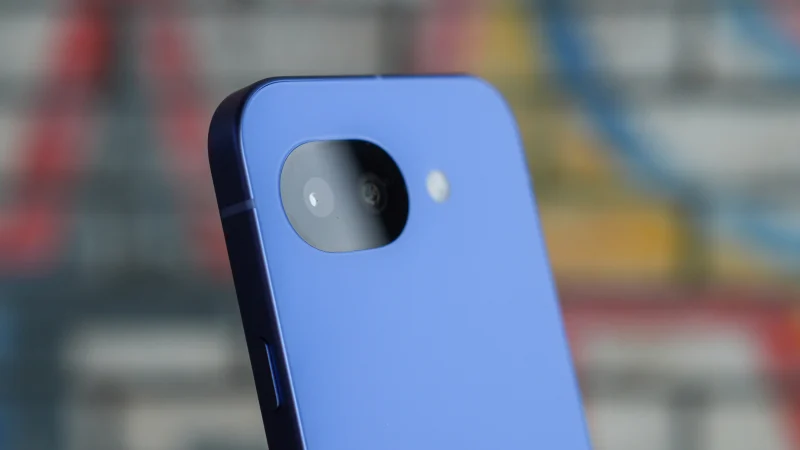
Google did not change the camera hardware from the last generation. The 10a and 9a both feature a 48MP main shooter with an f/1.7 aperture and optical image stabilization (OIS), a 13MP ultra-wide camera with an f/2.2 aperture, and a 13MP front-facing camera with an f/2.2 aperture. Video capture is also the same at 4K60 for the rear camera and 4K30 for the front camera.

The Pixel 10a offers Camera Coach (an AI-guided photography helper) and Automatic Best Take (which fixes group photos by replacing faces). The 9a does not have these features. Considering the two phones run on nearly identical software on basically the same hardware, there is a chance the 10a’s two new camera tricks will come to the 9a. Until then, the 10a edges out the 9a.
Winner: Pixel 10a
And The Winner Is…

Google Pixel 10a
The Pixel 10a and 9a are nearly identical in specs, with just slight design differences and minor upgrades to a few components. Despite the similarities, the Pixel 10a is probably the better option.
- The Pixel 10a has satellite connectivity that the 9a lacks. If you go off the beaten path, the 10a can literally become a lifesaver.
- If you like to live caseless, the 10a’s stronger glass may be more forgiving than the 9a’s.
- The Pixel 9a receives seven years of updates from its launch date (April 2025, with support until 2032), while the 10a gets updates until March 2033. If longevity matters, the 10a gets the nod.
- If you want to spend less cash on a Pixel, keep an eye on the 9a’s price, which may drop once the 10a goes on sale.
I’ll see how the 10a performs when I fully review Google’s newest device in the weeks ahead, but I expect it to edge out the 9a.
In the meantime, find out more about the Pixel 9a and how the Google Pixel 10 phones match up.
